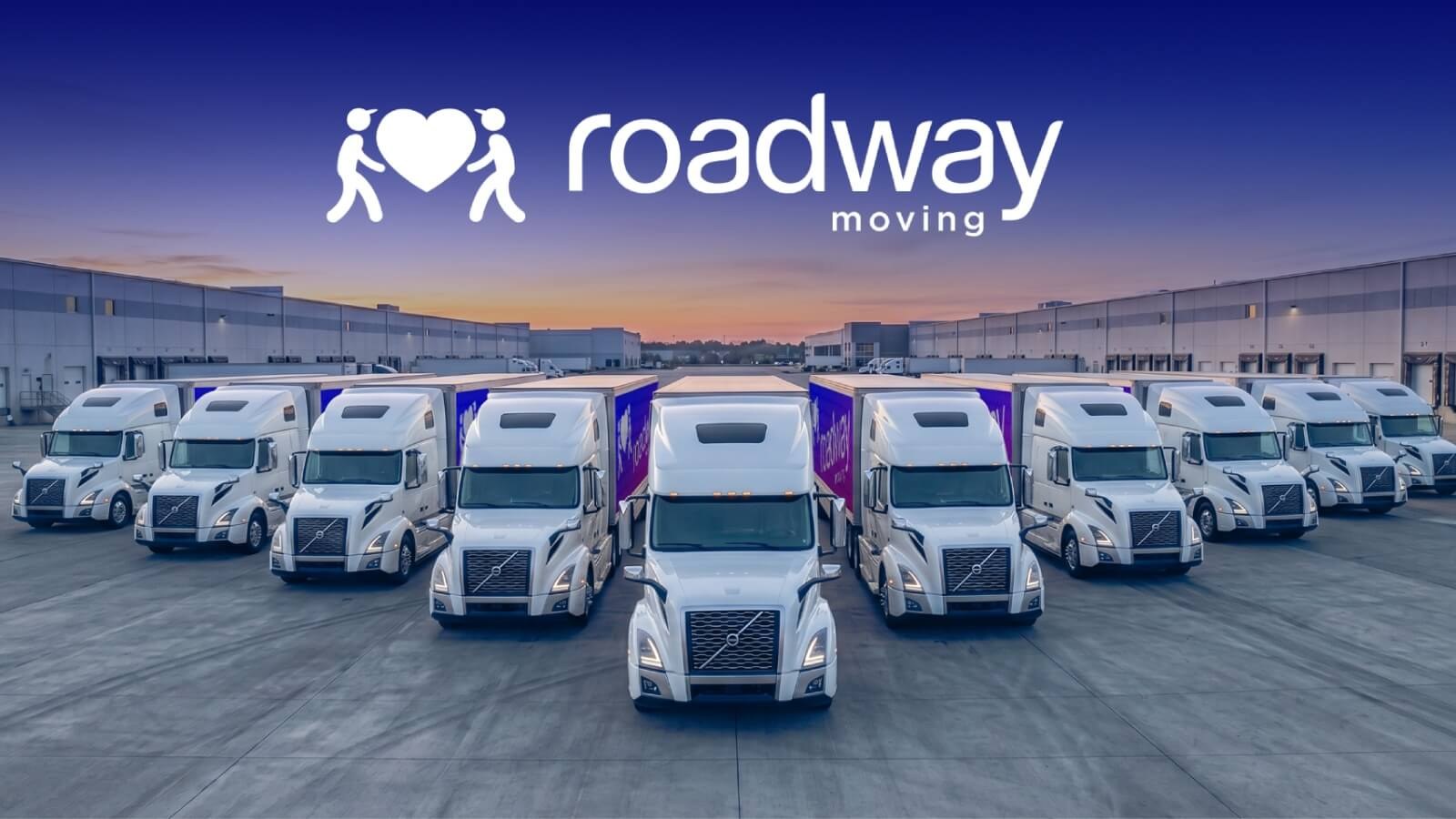
The expansion grows the company's fleet to nearly 300 trucks and tractors — and continues a pattern of investing in equipment that is both more efficient for customers and lighter on the environment.
NEW YORK, NY — Roadway Moving, a national moving and storage provider and Official Moving Partner of the New York Yankees, has added 85 new vehicles to its fleet ahead of the summer moving season, the busiest stretch of the year for the industry. The investment brings the company's fleet to more than 292 trucks and tractors.
The new vehicles break down into 50 moving trucks, 15 Volvo VNL 860 long-haul tractors, 15 long-haul trailers, and 5 climate-controlled trailers dedicated to the company's fine art division. The mix is telling: it expands capacity at both ends of Roadway's business at once — everyday local and regional moves on one side, and cross-country and high-value relocations on the other.
Built for summer demand
Timing is the practical driver. Moving activity peaks nationwide between late spring and early fall, and that surge is where on-time performance tends to slip for companies that haven't planned capacity ahead. Roadway is positioning the expansion as a way to hold its scheduling reliability steady through the busy months rather than stretch existing resources thinner.
"This expansion is about investing in the customer experience," said Ross Sapir, Founder and CEO of Roadway Moving. "Summer is our busiest season, and as demand continues to grow, we're expanding our fleet to maintain the reliability, care, and white-glove service our customers expect from us."
The added long-haul capacity is aimed at the corridors where Roadway sees the most interstate movement, connecting major markets including New York, Florida, California, Illinois, Texas, Colorado, Washington, and Georgia. The five new climate-controlled trailers, meanwhile, go to the company's fine art division, which handles temperature-sensitive shipments for galleries, museums, collectors, and luxury clients.
Efficiency and sustainability in the same purchase
What stands out about the expansion is that the efficiency and environmental angles aren't separate goals. The 15 Volvo VNL 860 tractors were chosen for their aerodynamic design and fuel-efficiency systems, which lower fuel consumption on long routes — a cost saving and an emissions reduction in the same vehicle. The company says all of the new trucks carry current green-fleet technology alongside updated safety systems and onboard cameras.
That framing connects directly to the company's Blue Promise initiative, launched on Earth Day 2026, which combined a closed-loop reusable-bin system, AI-assisted routing, and virtual inventory assessments to cut cardboard waste and emissions. Taken together, the two moves trace a consistent pattern: where Blue Promise addressed sustainability through process and software, the fleet expansion addresses it through hardware. As Sapir put it, the company treats environmental practice as "integrated into how we operate every day, not a seasonal campaign."
Expansion that tracks with demand
The scale of the investment is consistent with what League of Movers has observed in its tracking data. League of Movers monitors review activity and other brand-strength signals across more than 650 moving and storage companies in the United States, and Roadway has consistently ranked among the stronger performers in that index — placing in the top three nationally by volume of new reviews in April 2026, with a 4.9 out of 5 average rating across the platforms tracked.
That kind of sustained review growth is a reasonable proxy for genuine customer demand, and it lines up with the company's stated reason for expanding: a fleet investment of this size only makes sense for a business that is actually seeing more volume come through the door. In other words, the equipment purchase and the demand signals point in the same direction.
The takeaway
For customers, the most relevant effect of an expansion like this is rarely the truck count itself — it's whether the company can show up on time during the weeks when everyone is moving at once. By adding capacity ahead of peak season rather than during it, Roadway is making a fairly straightforward bet: that reliability under pressure is what keeps customers coming back, and that the way to protect it is to invest before the rush, not after.